
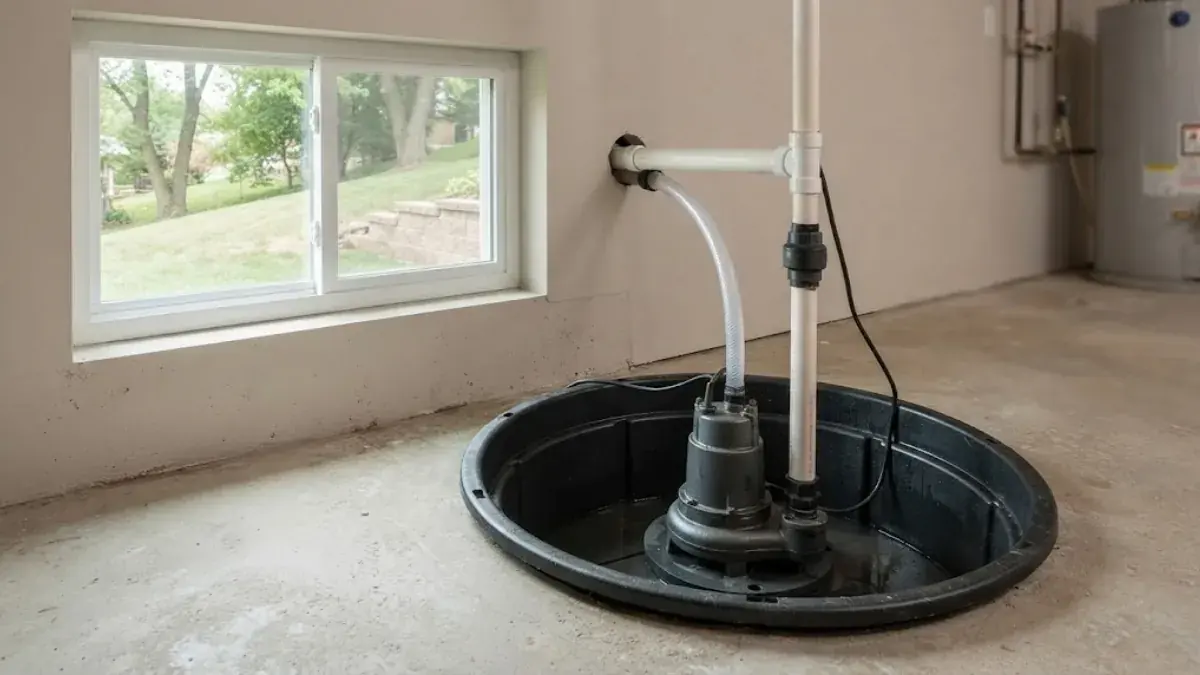
What You Are Actually Paying For
A sump pump quote covers the pump, the pit and liner if one is needed, the discharge pipe, a check valve, electrical work and labor. If the basement has no pit, the crew has to break the floor, dig the pit and patch the concrete. That is a big part of the total.
A replacement into an existing pit costs much less than a new install. Always ask whether the quote includes the pit work.
Factors That Move the Price
Comparing quotes is easier when each includes the same items.
| Factor | Why it matters | Ask your installer |
|---|---|---|
| New pit or existing pit | Breaking and patching concrete adds labor | Is the pit included? |
| Pump type | Submersible and pedestal pumps differ in price and life | Which type is quoted and why? |
| Horsepower | Bigger motors handle more water | How was the size chosen? |
| Battery backup | Keeps pumping through a power outage | Is a backup included or optional? |
| Discharge route | Long runs and bends add materials | Where does the water go? |
| Alarm or monitoring | Warns of failure | Is it included? |
Submersible or Pedestal
A submersible pump sits in the pit under water, runs quietly and is generally more robust. A pedestal pump has its motor above the pit, is easier to service and is usually cheaper, but it is louder and has a shorter life.
Most installers favor submersibles for a finished or semi-finished basement because of the noise and the reliability.
Why a Battery Backup Matters
Storms that bring heavy rain also bring power outages. A pump with no power is a pit that fills. A battery backup, or a water-powered backup where allowed, keeps pumping when the grid is down.
If your basement has finished space, a backup is worth pricing even if you do not install it on day one.
Discharge and Where the Water Goes
The pump moves water out through a pipe to the yard or a drywell. The discharge should send water away from the foundation, not onto a neighbor's property or into the sewer. Check the local rules on where sump water may go.
A frozen or kinked discharge line is a common cause of failure in winter. Ask about slope, a check valve and a freeze-resistant outlet.
Choosing a Size and a Switch
Pumps come in different motor sizes and with different float switches. A tethered float is common but can snag on the pit wall. A vertical float or an electronic switch is more reliable in a narrow pit. Ask which switch is quoted.
Size depends on how fast water enters, how high it has to be lifted and how long the discharge run is. An oversized pump short-cycles, and an undersized one cannot keep up in a storm.
Maintenance That Adds Years
Clean the pit of silt and gravel at least once a year, test the float and check that the discharge is clear. Make sure the check valve clicks shut after the pump stops, since a failed valve sends water back into the pit.
Replace a battery backup on the schedule the maker lists. A dead battery is as bad as no backup.
What a Quote Should Say
A written quote should name the pump model, the pit size, the discharge route and the backup if one is included. It should say who handles concrete patching and electrical work, and what the warranty covers. Ask for the labor and the parts to be listed separately.
A clear price before work starts means no surprise on the day. If the crew finds a problem once the floor is open, they should explain it and update the price before going on.
Wet Basements in Shrewsbury
Shrewsbury sits beside Lake Quinsigamond and the terrain varies from lot to lot, so some basements are drier than others. Spring snowmelt and heavy summer storms are when sump pumps work hardest.
Ask the Shrewsbury building department whether a permit is needed for a new pit or discharge, and where sump water may be directed. The department can answer for your lot.
Related Pages and Nearby Towns
Our sump pump page explains repair and install work, and basement waterproofing covers the bigger picture when a pump alone is not enough. We also serve Grafton and Boylston, where wet basements are common in spring.
Testing Your Pump Before the Storm
Pour a bucket of water into the pit and watch the pump start and shut off. Listen for grinding or rattling and check that the water leaves through the discharge. Clean debris from the pit once a year.
A pump that fails the test gets repaired or replaced before the next storm, not during it.
Want a Clear Price Before Work Starts?
Call and we will look at the pit, the pump and the discharge and give you a written quote.
Sump Pump Cost Questions
It varies with use and quality. Test yours yearly and replace it if it is old or noisy.
A backup is a good idea in a basement with finished space or a history of flooding.
Usually not. Check the local rules and send water to the yard or a drywell.
Pit work, pump type, backup and discharge routing all change the total.
A wet basement, a high water table or a floor drain that backs up in storms suggest it is.