
Start With the Source of the Water
Water enters a basement through cracks, the joint between wall and floor, window wells, the foundation itself or from rising groundwater. The fix depends on which route it takes. Waterproofing the wrong spot wastes money.
A good estimate starts with an inspection, not a standard price. Ask the estimator to show you where the water enters and why.
Methods and What They Address
Often the right answer combines more than one method.
| Method | Best for | Limits |
|---|---|---|
| Crack injection | Single cracks in poured walls | Does not address groundwater pressure |
| Exterior waterproofing | Water pushing through foundation walls | Requires excavation |
| Interior drain and sump | Groundwater rising through the floor | Manages water, does not stop it entering |
| Grading and gutters | Surface water near the house | Does not fix interior leaks |
| Window well repair | Leaks at basement windows | Limited to that opening |
What Drives the Estimate
Length of wall or floor perimeter, depth of excavation, access around the house, type of foundation and whether a sump pump is needed all change the cost. Finished basements raise it because interior work means removing drywall or flooring.
A cheap estimate that skips the sump pump or the drain may leave the problem half solved. Ask what is included and what is not.
Cheaper Fixes First
Before major work, check the simple things. Extend downspouts several feet from the house, clean gutters and slope the soil away from the foundation. Seal visible cracks and window wells.
These steps cost little and often cut the water that reaches the basement. They also help any larger system work better.
Be Wary of Pressure Sales
A written estimate with a clear scope and a clear price before work starts is a fair request. Be cautious about same-day discounts and vague promises of a permanent seal.
Questions to Ask Any Contractor
Ask who will do the work and whether it is licensed and insured. Ask how the system handles a power outage, whether a battery backup is included and what the warranty covers. Ask for a written scope listing every item.
Get at least two estimates and compare line by line. Differences often come from scope, not price.
Interior Drain Systems Explained
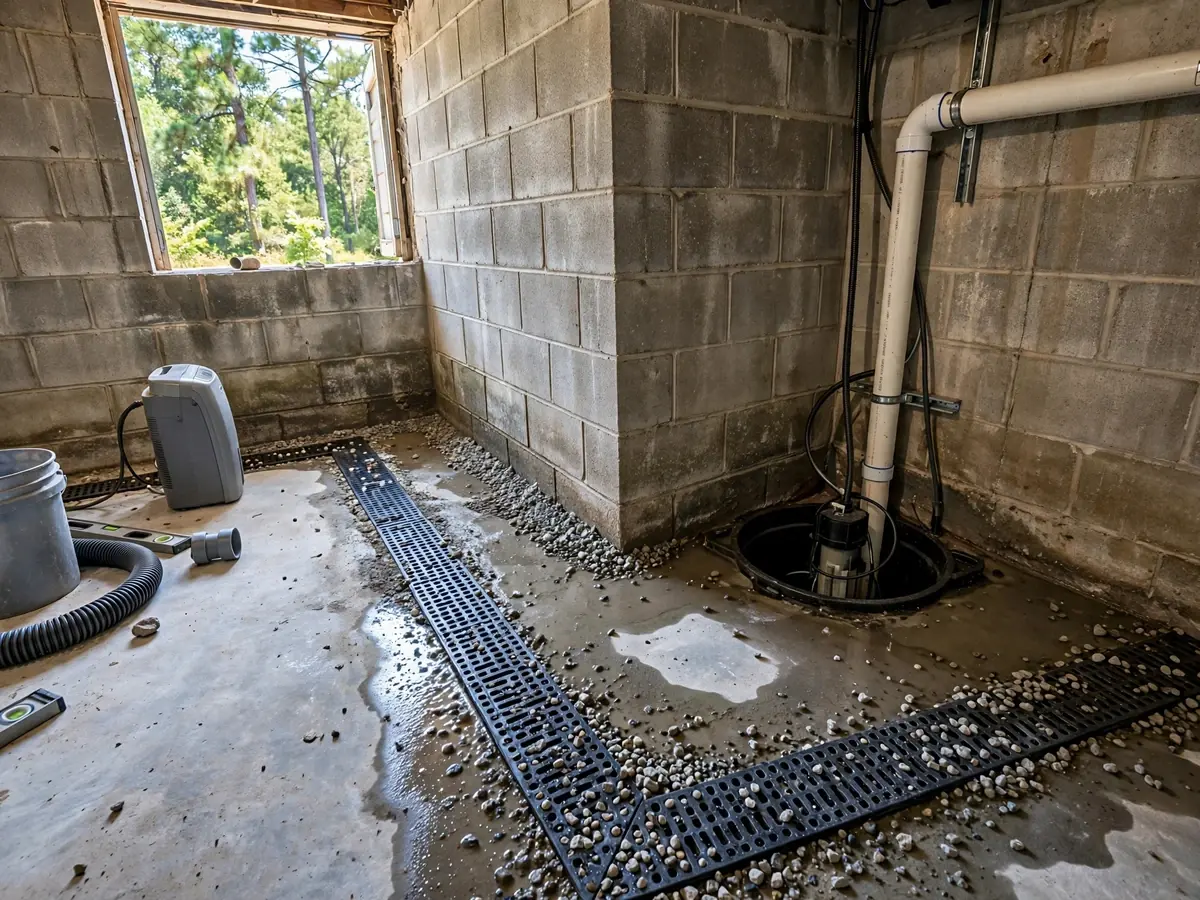
An interior drain sits in a trench cut along the edge of the basement floor. Water that enters at the wall or the joint drops into the drain and flows to a sump pit, where the pump sends it out. The system does not stop water from reaching the wall, but it keeps it off the floor.
This approach suits groundwater pressure and is less disruptive than digging around the house. It does need a reliable pump and a plan for outages.
Exterior Waterproofing and Its Trade-offs
Exterior work exposes the foundation wall, seals it and installs drainage at the footing. It treats the wall itself and can last a long time. It also means digging next to the house, which affects landscaping, walkways and sometimes utilities.
Because of the effort, it makes sense when the wall is damaged or the leak is severe. A good estimator explains why exterior work is or is not needed for your house.
Dampness, Seepage and Active Leaks
Not every wet basement has the same problem. Damp walls and a musty smell point to moisture passing through concrete, while puddles after rain point to cracks or a failed joint. Water streaming from a crack during a storm is an active leak.
Note when and where the water appears, and photograph it. That record helps an estimator choose a method, and it keeps you from paying for work that treats the wrong problem.
Humidity Control as Part of the Fix
Even a sealed basement can feel damp in summer when warm air meets cool walls. A dehumidifier with a drain hose, set to hold moderate humidity, protects stored items and finishes. It does not replace waterproofing, but it keeps a repaired basement comfortable.
Check the dehumidifier drain so it does not become another leak source.
Water and Soil Around Shrewsbury
Shrewsbury sits beside Lake Quinsigamond, and the terrain varies from lot to lot. A lot at the base of a slope tends to collect runoff, while one higher up usually drains more freely.
Ask the Shrewsbury building department about permits for excavation, drainage and discharge before you accept a plan. The department can answer for your lot.
Related Pages and Nearby Towns
Our basement waterproofing page explains how we approach the work, and the sump pump page covers the pump side. We also serve Northborough and east Worcester, where basements near water and on slopes see the most trouble.
After the Work Is Done
Keep the paperwork, including the scope, the warranty and photos of the finished system. Test the pump each spring and clean the drain access points. Tell a future buyer what was done.
A waterproofed basement still needs good gutters and grading to stay dry.
Water in the Basement? Call Us
A plumber can find where the water enters and explain the options with a clear price before work starts.
Basement Waterproofing Cost Questions
Scope, method and what is included drive the difference. Compare each line.
Sometimes. Ask whether the estimate includes the pit, the pump and a backup.
Waterproofing paint can help with dampness but does not stop pressure from groundwater.
It addresses water at the foundation wall but requires excavation. An inspection tells you if it fits.
Ask Shrewsbury's building department about your project.